Comparison: Inland vs Ocean Freight for Auto Parts
This article compares inland versus ocean freight for automotive logistics. It outlines the core differences in cost, speed, capacity, and risk. It helps procurement managers select the right shipping method for specific parts, volumes, and delivery windows.
- Ocean freight offers lower per-unit cost for bulk parts but adds significant lead time.
- Inland transport is faster and better for just-in-time production or urgent replenishment.
- The right choice depends on part value, weight, volume, and production schedules.
- Hybrid models can combine both methods to balance cost and speed.
- Always factor in customs, documentation, and last-mile delivery into the total cost.
Procurement teams often face a direct choice when moving auto parts across long distances. The decision usually comes down to two main modes: ocean freight and inland transport. Each method carries different cost profiles, lead times, and operational risks. This comparison helps buyers decide which method fits their supply chain needs.
How the core difference works
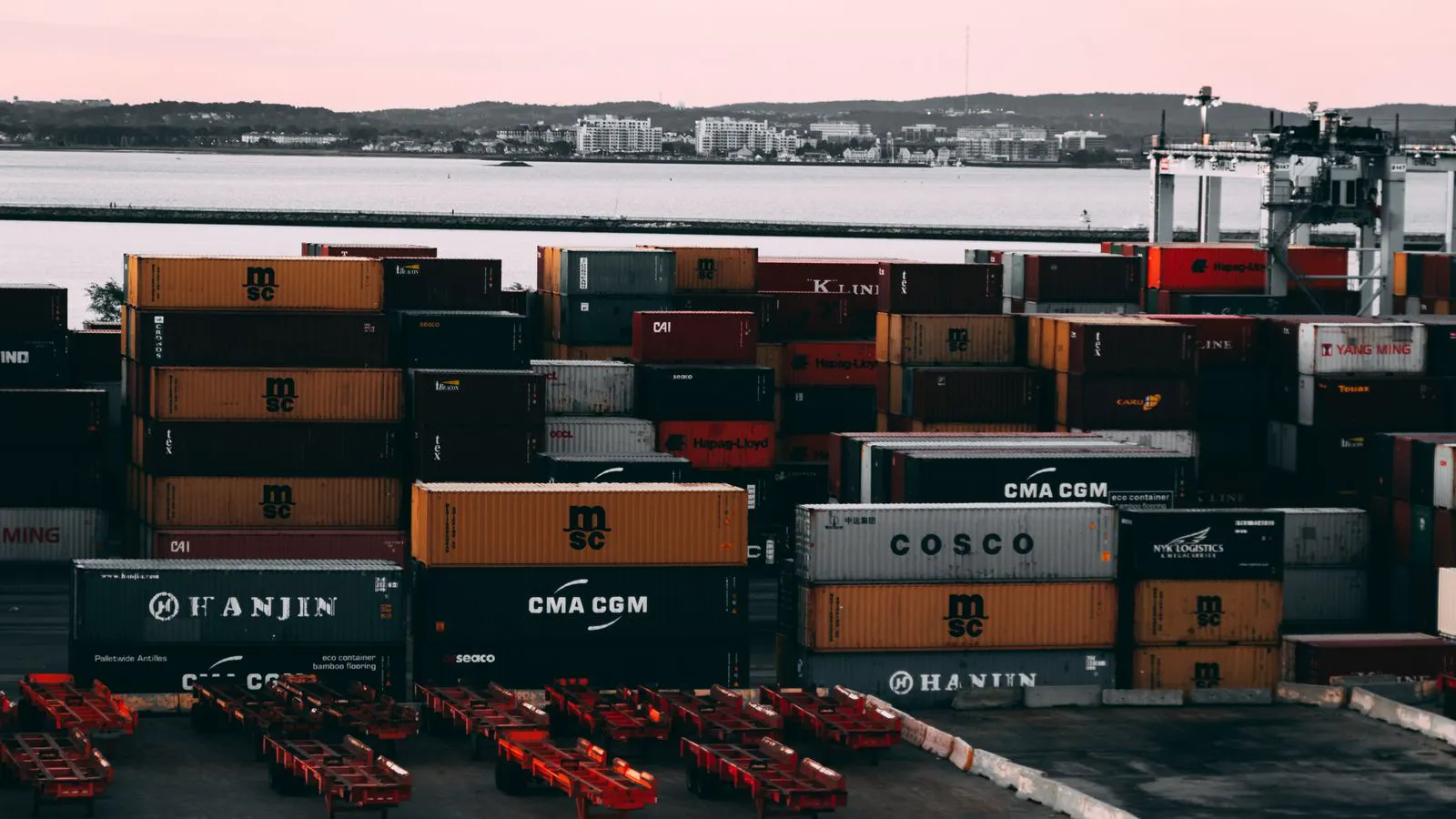
Ocean freight moves goods by container or break-bulk vessels across international waters. It is the standard method for importing large volumes of parts from distant manufacturers. Inland transport covers the remaining distance using trucks, trains, or domestic vessels. It moves goods from a port or border crossing to a distribution center or plant.
The split matters because the two legs of the journey behave differently. Ocean legs are slow but cheap per unit. Inland legs are fast but expensive per kilometer. Buyers must look at the whole chain, not just the shipping rate. A cheap ocean rate can become expensive if it forces you to hold more inventory.
Consider a scenario where a buyer imports brake pads from a supplier in Asia. The ocean leg might take 30 to 45 days depending on the route. The inland leg, moving from a West Coast port to a Midwest assembly plant, might take 3 to 5 days. If the buyer only looks at the ocean rate, they might miss the fact that the longer transit time requires them to keep three weeks of safety stock. That extra inventory ties up cash and increases the risk of obsolescence if the part design changes.
The cost structure also differs in how it scales. Ocean freight rates are often fixed per container once booked, meaning the cost per part drops as the volume in the container increases. Inland rates are typically variable, based on weight, distance, and service level. This means a small truckload of high-value sensors will have a much higher transport cost per unit than a full container of stamped steel brackets.
When to choose ocean freight
Ocean freight works best for high-volume, non-urgent shipments. Consider it when you are importing full container loads of stamped parts, fasteners, or bulk components. These items have low cost per unit and do not need to arrive within a week or two.
The main advantage is cost efficiency. A 40-foot container can hold thousands of parts. The cost is spread across that volume. For a procurement manager, this means a lower landed cost per part. It also simplifies inventory planning because you order in large, predictable batches.
Imagine ordering 10,000 units of a specific gasket. Shipping them in a 40-foot container might cost $3,000 to $4,000 in freight, depending on the route and market conditions. If you tried to ship the same volume via air freight or a series of small inland truckloads, the cost would be significantly higher. Ocean freight allows you to take advantage of economies of scale.
There are limits. Ocean transit times are long. You must account for port congestion, customs clearance, and inland drayage. If your production line stops for two extra days, the cost savings may disappear. You also need to plan around container availability and slot bookings. A missed vessel means a delayed shipment and potential penalties.
For parts with long lead times or high demand, ocean freight is often the only viable option. If you are importing a new engine block from a supplier overseas, you might need to book space months in advance. The long lead time is not just a downside; it is a planning requirement. You must build your production schedule around the vessel schedule.
When to choose inland freight
Inland freight is the workhorse for domestic movement and short-haul imports. It is the right choice when you need parts to arrive quickly. Use it for just-in-time delivery to assembly plants, urgent replacements, or low-volume orders that do not justify a full container.
Speed is the main benefit. A truck can move a load in hours or days. This supports lean manufacturing and reduces the need for large safety stock. You can also use smaller, more flexible equipment like pallet jacks, LTL trucks, or specialized auto parts carriers.
For example, if a supplier in Texas needs to deliver a batch of fuel injectors to an assembly plant in Ohio, a truck can get there in 20 to 25 hours. If the same parts were shipped by ocean from a port in the Gulf of Mexico, they would first need to be moved to the port, loaded, and then moved again by truck. The inland route is more direct and faster.
The cost structure is different. Inland rates are based on distance, weight, and service level. They are higher per unit than ocean freight. For a small order of high-value electronics or specialty gaskets, the transport cost can be a larger slice of the total. You also face more variability. Road congestion, weather, and driver availability can cause delays.
Inland freight is also more flexible. You can change the destination at the last minute if a plant needs a different part. You can split a shipment into multiple drops. These features are less possible with ocean freight, where the route is fixed once the container is loaded.
How to compare the two options
Use a structured comparison to make the decision. The table below outlines the key trade-offs for procurement managers.
| Option | Best for | Limitations |
|---|---|---|
| Ocean Freight | High-volume imports, low-cost parts, long lead times | Slow transit, port congestion, high inventory holding costs |
| Inland Freight | Domestic moves, urgent orders, just-in-time delivery | Higher cost per unit, weather dependency, limited capacity |
| Hybrid Model | Mixed supply chains, balancing cost and speed | Complex coordination, higher administrative overhead |
| Rail (Inland) | Heavy, bulk parts over long domestic distances | Fixed schedules, less flexible than trucking |
This table is a starting point. The real decision depends on your specific parts, volumes, and production schedules. A part that is cheap to ship by ocean may be too slow for your line. A part that is fast by truck may be too expensive for a large order.
When comparing options, consider the total cycle time. For a part imported from China, the total cycle time includes the time to book the container, the time to load it at the origin port, the ocean transit, the time for customs clearance, and the inland delivery to the plant. This cycle time determines how much safety stock you need. If the cycle time is 60 days, you might need to keep 45 days of inventory on hand. If you switch to a faster method, you can reduce that inventory.
Also consider the reliability of the mode. Ocean freight is subject to weather, port congestion, and geopolitical issues. Inland freight is subject to road conditions, driver shortages, and traffic. Neither is perfectly reliable, but their failure modes are different. A port strike can stop ocean freight for weeks. A snowstorm can delay inland freight for a day or two.
How to calculate the true cost
The shipping rate is only part of the total cost. You need to look at the full landed cost. This includes freight, customs duties, insurance, documentation, and last-mile delivery. It also includes the cost of capital tied up in inventory.
For ocean freight, the hidden cost is often inventory. You ship a large container, but it takes weeks to arrive. You must stock enough parts to cover the transit time. That capital is tied up. If your line stops, the cost is high.
For inland freight, the hidden cost is price volatility. Spot rates can spike during peak seasons or bad weather. You may pay a premium for expedited service. A fixed contract can help, but it reduces flexibility.
To compare fairly, use the same baseline. For example, calculate the cost to deliver 1,000 units of a specific part to your plant. Include all fees. Then compare the total for ocean versus inland. This gives you a clear number to use in your procurement decisions.
Let’s walk through a simple calculation. Suppose you need 1,000 units of a specific sensor. The part costs $50 each. The total value is $50,000.
Option A: Ocean freight.
Freight: $1,500
Customs duties: $2,500 (5%)
Insurance: $150
Documentation: $200
Inland delivery from port to plant: $800
Inventory holding cost: $1,000 (based on a 20-day transit time and a 5% annual interest rate)
Total landed cost: $6,150
Option B: Inland freight (assuming the supplier is in the same country).
Freight: $1,200
Documentation: $100
Inland delivery to plant: $500
Inventory holding cost: $500 (based on a 2-day transit time)
Total landed cost: $2,800
In this case, inland freight is cheaper. But if the supplier were overseas, the ocean freight cost would be much lower, and the inland cost would be much higher. The key is to use the same part, the same volume, and the same delivery point for both options.
Common mistakes to avoid
Buyers often make a few predictable errors when choosing between these methods. The first is to focus only on the freight rate. A low rate on a quote is useless if it leads to delays or higher inventory costs.
The second mistake is to ignore customs and documentation. A missing bill of lading or incorrect HS code can hold a container at the port for days. This turns a low-cost shipment into a high-cost emergency.
The third mistake is to treat the two options as mutually exclusive. Many supply chains use both. You might import bulk parts by ocean and use inland transport for urgent top-ups. This hybrid approach can be more efficient than relying on one method alone.
Another mistake is to underestimate the complexity of coordinating multiple carriers. If you use a hybrid model, you need to manage relationships with ocean forwarders, inland carriers, and customs brokers. This adds administrative overhead. You need systems to track shipments, manage documents, and handle exceptions.
Finally, buyers sometimes fail to review their shipping strategy after the initial setup. Freight rates change, port congestion fluctuates, and production needs shift. A strategy that worked last year might not be optimal this year. Regular review is necessary to stay aligned with your cost and service goals.
How to build a robust shipping strategy
The best strategy is usually a mix. Start with your production schedule. Identify which parts are critical and which can wait. For critical, high-volume parts, use ocean freight to keep costs low. For critical, low-volume parts, use inland freight to ensure availability.
Build relationships with carriers and forwarders. A good partner can help you manage customs, book space, and handle exceptions. They can also provide visibility into your shipments, which is key for planning.
Review your strategy regularly. Freight rates, port congestion, and production needs all change. A quarterly review of your shipping methods can help you stay aligned with your cost and service goals.
To implement this, create a matrix of your parts. For each part, list the volume, the criticality, the current shipping method, and the alternative methods. Use this matrix to identify where you can switch modes to save cost or improve speed. For example, if a part is currently shipped by air freight but the volume is high enough to justify ocean freight, switch to ocean. If a part is currently shipped by ocean but the volume is low and the lead time is too long, switch to inland.
Also consider the total network. Sometimes it is cheaper to consolidate shipments from multiple suppliers into one container. This reduces the number of ocean legs and lowers the cost per unit. It also simplifies customs clearance. You can use a single forwarder to manage the entire process.
Final thought
There is no single best method for automotive logistics. The right choice depends on the part, the volume, and the schedule. Ocean freight is the cost leader for bulk imports. Inland freight is the speed leader for urgent domestic moves. The most effective supply chains use both, matched to the specific needs of each part. By comparing the options carefully and calculating the full landed cost, you can make decisions that protect your margins and keep the line running.
Frequently asked questions
What is the main difference between ocean and inland freight?
Ocean freight moves goods across international waters and is slower but cheaper per unit. Inland freight moves goods domestically or from a port to a plant and is faster but more expensive per kilometer.
When should I use inland freight instead of ocean?
Use inland freight when you need fast delivery, have small order volumes, or require just-in-time service. It is also the only option for domestic moves.
How does customs affect the cost of ocean freight?
Customs clearance adds time and potential fees to ocean shipments. Delays can be significant if documentation is incorrect. It is a major factor in total landed cost.
Can I use both methods at the same time?
Yes, many supply chains use a hybrid model. They import bulk parts by ocean and use inland transport for urgent or low-volume items. This balances cost and speed.
What is the best way to compare the two costs?
Calculate the total landed cost for a specific part and order quantity. Include freight, duties, insurance, and inventory holding costs. Then compare the ocean and inland totals directly.