Automotive Braking Systems: Friction Material Composition Basics

Automotive braking systems rely on friction materials that balance heat resistance, wear rate, and stopping power. Understanding brake pad composition helps buyers match material properties to service conditions, verify performance claims, and avoid sourcing defects that fail under thermal stress.
- Friction material composition determines how brake pads handle thermal load, fade, and wear during repeated braking.
- Binder chemistry, filler type, and friction coefficient interact to define service life and noise performance.
- Buyers must match pad material class to the intended operating temperature, duty cycle, and vehicle class.
- Contamination control and incoming inspection are as important as nominal material specifications when sourcing brake components.
- Worked examples should focus on matching a high-heat racing compound to a passenger vehicle application to avoid performance gaps.
Why Friction Material Composition Matters More Than Pad Shape
Automotive braking systems depend on the friction material interface between the pad and the rotor. The pad does not simply rub against metal. It must convert kinetic energy into heat while maintaining a stable coefficient of friction. If the material composition drifts, the pad may fade, squeal, or wear unevenly.
The composition of friction materials includes organic binders, inorganic fillers, metal fibers, and friction-enhancing agents. Each component serves a specific function. Binders hold the structure together. Fillers provide mass and influence friction behavior. Metal fibers help distribute heat. Friction agents modify the coefficient and noise profile.
For buyers, this matters because a pad that works in one application may fail in another. A passenger car pad designed for city driving may overheat on a long downhill grade. A high-temperature pad for track use may wear too fast on a daily commuter vehicle. Sourcing decisions must therefore start with the thermal and mechanical profile of the target application, not with the pad’s appearance or nominal size.
How Heat Resistance Is Built Into Brake Pad Composition
Heat resistance in brake pads comes from how the friction material manages temperature rise and temperature decay. When a brake pad locks up or locks down, the interface temperature can climb rapidly. The material must absorb heat, transfer it to the rotor, and resist breakdown of the binder.
Organic binders typically include resins such as phenolic, polyurethane, or epoxy-based compounds. Phenolic binders are common in automotive brake pads because they offer a good balance of heat resistance and cost. Polyurethane binders can improve low-temperature performance and noise control. Epoxy binders provide higher structural strength but can be brittle at low temperatures.
Inorganic fillers include materials such as aluminum oxide, glass fibers, calcium carbonate, and mica. These fillers increase the density of the pad and influence the friction coefficient. Mica, for example, can improve wear resistance and reduce dust. Aluminum oxide can help manage friction behavior over a broad temperature range. Glass fibers add tensile strength and help the pad hold its shape under load.
Metal fibers, including copper, stainless steel, or iron, are used in higher-performance or high-heat applications. They help conduct heat away from the friction interface and improve thermal stability. However, they can increase cost and may affect noise. Some modern formulations reduce metal content to lower noise and emissions, while relying on optimized filler packages to maintain heat resistance.
How Wear Rate and Fading Interact
Wear rate and fading are connected but distinct performance metrics. Wear rate describes how quickly the pad material is consumed. Fading describes a loss of braking performance as temperature rises. A pad can wear slowly but still fade if its friction coefficient drops at high temperature. Conversely, a pad can fade moderately but wear quickly if the friction material is too soft.
Friction material composition controls both. A formulation with a high proportion of soft binders may provide good initial friction but will break down faster under heat. A formulation with hard fillers may resist wear but can increase rotor scoring if the friction surface is too abrasive. A balanced formulation uses a mix of hard and soft particles to keep the interface stable.
For sourcing, this means a pad is not defined by a single number. Buyers should look for a combination of performance parameters: initial coefficient of friction, steady-state coefficient at operating temperature, fade resistance, wear rate against the intended rotor material, and noise behavior. These parameters interact. A pad that scores well at room temperature may not perform consistently at two hundred degrees Celsius.
How Noise and Dust Are Controlled in Friction Materials
Noise and dust are often treated as secondary concerns, but they affect customer satisfaction and warranty costs. Noise in a braking system usually comes from vibration at the pad-rotor interface. If the pad material is too stiff or too soft, it can transfer high-frequency vibrations that produce squeal.
Friction material composition affects vibration control. Organic binders can damp vibration. Fillers can modify the stiffness of the pad. Some formulations use a layered structure, with a friction layer and a support layer. The friction layer controls the interface. The support layer controls heat transfer and structural integrity.
Dust is another factor. Dust comes from wear particles that are too fine to be visible as wear but accumulate on the rotor and wheels. Formulations that use larger filler particles or more stable binder networks tend to produce less dust. This matters for buyers sourcing pads for premium vehicles or for fleets where cleanliness and rotor life are concerns.
How to Match Friction Material to the Sourcing Decision
When sourcing brake pads, the first question is not which brand is cheapest. The first question is which friction material class fits the application. A passenger car city-driving application may require a formulation that prioritizes low dust, low noise, and moderate wear resistance. A towing vehicle or mountain-pass application may require a formulation that prioritizes heat resistance and fade stability. A track or racing application may require a high-heat compound with faster wear and higher thermal capacity.
The second question is whether the material is compatible with the rotor. Rotors are not all the same. Cast iron rotors, semi-metallic rotors, and ventilated rotors behave differently under heat. A pad formulation that works on a solid rotor may not be ideal on a ventilated rotor because the heat transfer path changes.
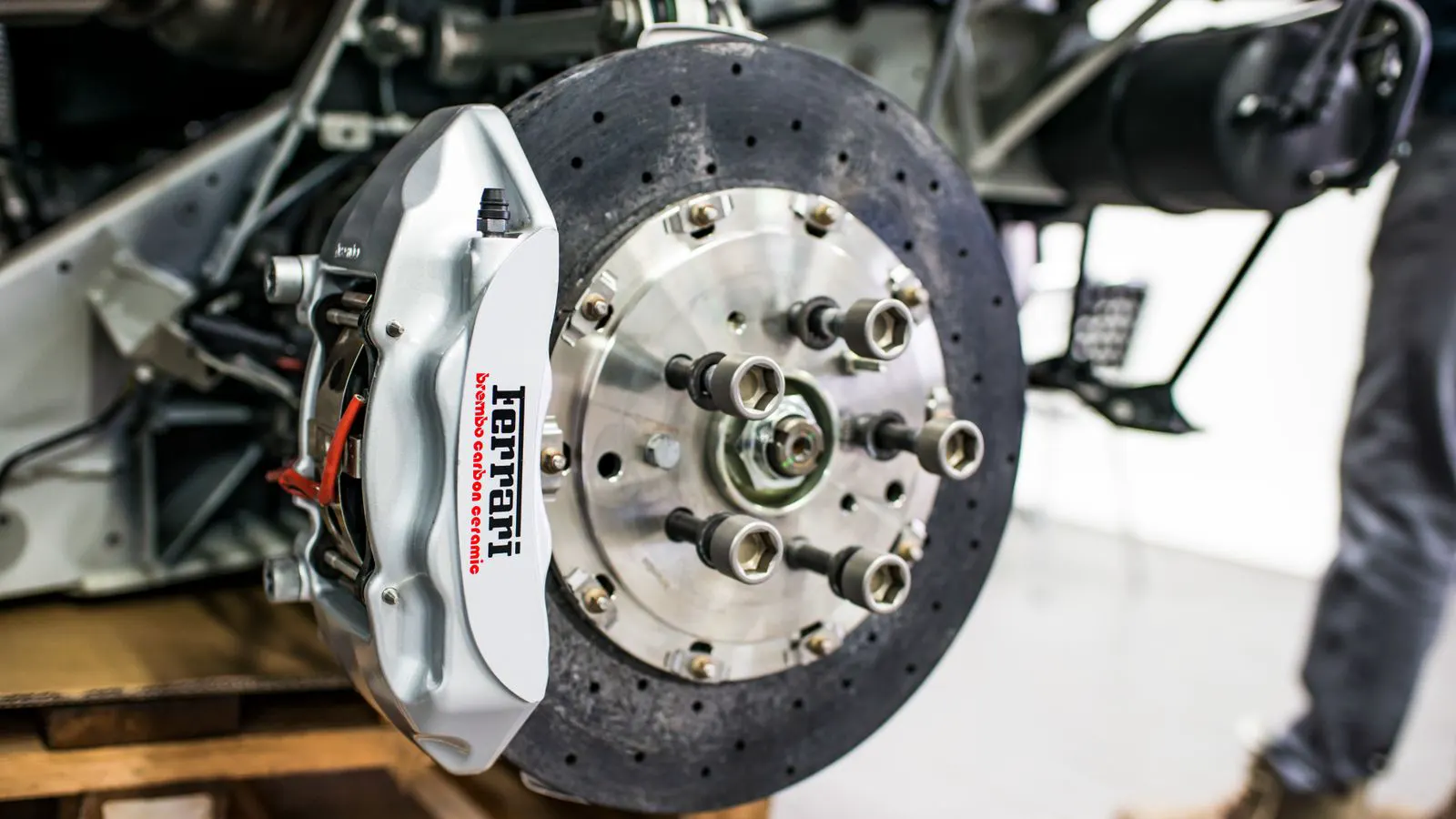
The third question is whether the pad structure matches the backing plate and caliper design. The backing plate conducts heat. The caliper piston applies pressure. If the friction material is too thick, the pad may not seat correctly. If it is too thin, the pad may wear unevenly. The friction material must be compatible with the mechanical interface, not just the thermal profile.
Worked Example: Choosing a Pad for a Mixed-Duty Fleet
Consider a fleet that operates delivery vans in a city with stop-and-go traffic and occasional highway driving. The service conditions include frequent low-speed braking, moderate temperatures, and a need for low dust to keep wheels clean. A high-heat racing pad would fail because it would wear too quickly and may produce excess noise. A low-cost passenger pad may not handle the repeated thermal cycling well.
A suitable friction material composition would use a phenolic or polyurethane binder, a balanced filler package with glass fiber and mica, and a moderate metal fiber content. This formulation would provide adequate heat resistance, lower dust generation, and acceptable wear rate. The buyer would then verify that the pad thickness, backing plate design, and caliper fit match the vehicle specification.
The sourcing decision would also include incoming inspection. The buyer would check for consistent friction material density, absence of contaminants, and proper bonding to the backing plate. A pad can have the correct nominal composition but still fail if the material is not uniform. Contamination in the import channel, such as oil, moisture, or foreign particles, can degrade the friction interface and cause inconsistent performance.
Common Material Science Mistakes in Brake Pad Sourcing
Buyers often make the mistake of comparing pads by brand name or price alone. Two pads with the same dimensions can have very different friction material compositions. One may be optimized for low noise, while another is optimized for high-heat performance. The dimensions do not tell the buyer which one will perform in the target application.
Another mistake is assuming that a higher coefficient of friction always means better braking. A very high initial coefficient can reduce pad life and increase rotor wear. The goal is a stable coefficient over the operating temperature range. A pad that brakes well at room temperature but fades at high temperature is not a better pad than a pad that maintains consistent performance.
A third mistake is ignoring the backing plate. The backing plate is not just a support. It is part of the thermal system. If the backing plate is too thin or poorly designed, heat will build up in the friction material and cause premature fade. The friction material and the backing plate must be considered as a system.
How to Verify Friction Material Performance Before Purchase
Before purchasing brake pads, buyers should request a technical data sheet that lists the friction material class, binder type, filler package, and performance parameters. The data sheet should include the coefficient of friction at room temperature and at elevated temperature, wear rate, fade resistance, and dust generation. If the supplier cannot provide this information, the buyer should treat the product as unverified.
The buyer should also request a sample for inspection. The sample should be checked for material uniformity, surface finish, and bonding quality. A visual inspection can reveal defects such as voids, cracks, or inconsistent density. These defects may not be visible in a standard photograph but can cause failure in service.
For high-volume sourcing, the buyer should require a test plan. The test plan should include thermal cycling, wear testing against the intended rotor, and noise evaluation. The test results should be documented and retained. This creates a record that the pad meets the specified performance profile and helps resolve any warranty disputes.
Final Notes for Professional Buyers
Automotive braking systems are not a single product. They are a system of materials, interfaces, and thermal paths. The friction material is the most visible part, but it works together with the rotor, backing plate, caliper, and fluid. A buyer who understands friction material composition can make better sourcing decisions, avoid performance gaps, and reduce the risk of field failures.
The key is to match the material to the application. A passenger vehicle city-driving pad, a towing vehicle pad, and a track pad are all made from friction materials, but they are engineered for different thermal and mechanical profiles. The buyer should start with the duty cycle, then select the friction material class, then verify the performance data, and finally inspect the incoming product.
This approach reduces the risk of buying a pad that looks correct on the shelf but fails in the field. It also creates a defensible sourcing record. When a brake pad fails, the buyer should be able to show that the friction material was selected for the intended service conditions, that the performance data was verified, and that the incoming product met the specification. That is the difference between a reactive fix and a controlled sourcing process.
Frequently asked questions
What is the main purpose of the binder in brake pad friction material?
The binder holds the filler and fiber particles together and helps the pad maintain its shape. It also affects heat resistance, noise, and wear rate.
Why can a high-temperature pad be a poor choice for daily driving?
High-temperature pads are engineered to handle extreme heat and rapid energy conversion. They often wear faster and may produce more noise, which is not suitable for low-duty passenger vehicles.
How does the backing plate affect friction material performance?
The backing plate conducts heat and supports the friction layer. If it is poorly designed, heat can build up in the pad and cause fade or uneven wear.
What should a buyer check in a technical data sheet for brake pads?
A buyer should check the friction material class, binder type, filler package, coefficient of friction at operating temperature, wear rate, fade resistance, and dust generation.
Can two brake pads with the same dimensions perform differently?
Yes. Dimensions describe the physical size, but friction material composition, density, and backing plate design determine performance. Two pads of the same size can have very different service life and braking behavior.